Different Types of Car Transmissions Everyone Should Know
What feels normal in one car may not in another, and different types of car transmissions everyone should know can help explain why that matters.
Jimi Everette
4/14/20264 min read
How To Know Which Transmission Your Car Has
Figuring out which transmission your car has usually starts with the information that came with the vehicle. The owner’s manual is the clearest source because it identifies the drivetrain and gives context for how the vehicle is meant to operate.
When that information is not easy to find, a qualified shop can verify the exact transmission using vehicle details tied to the specific model and configuration. Paying attention to how the car responds in everyday driving can also help, since the overall feel of acceleration and shifting reveals whether the system behaves in a more traditional or performance-focused way.
Why Transmission Service Needs Can Vary
Transmission service varies because each system type operates through a different internal process. The way a transmission creates movement and manages shifting affects how it wears and what kind of attention it may eventually need. That is why one design may develop problems gradually while another shows changes in performance much more suddenly. Understanding those differences helps explain why maintenance and repair recommendations are not always the same from one transmission to the next.
Autobahn Imports for All Your European Vehicle Needs
Autobahn Imports serves Phoenix-area owners of European vehicles who need skilled, professional repair and maintenance support. Transmission service is one part of a broader offering that includes diagnostics and full repair.
Our team brings over 100 years of combined experience, providing drivers with a dependable resource for interpreting difficult transmission concerns. If you need help from a transmission repair shop, Autobahn Imports offers experienced service tailored to European vehicles and their more specialized systems.
A vehicle’s transmission influences far more than shifting alone. Understanding different types of car transmissions gives drivers a stronger sense of what their car is designed to do and how it should feel on the road. That awareness can make routine vehicle ownership feel less uncertain and more informed. When expert help is needed, Autobahn Imports is ready to provide trusted guidance and service.
Transmission talk usually starts once something feels off, but understanding how these systems work is useful long before a problem shows up. Knowing the different types of car transmissions can make everyday driving feel a lot less confusing, especially when one vehicle shifts smoothly while another responds in a completely different way. From old-school manual gearboxes to newer designs built around efficiency and performance, each transmission creates its own driving character.
Why Understanding Transmission Types Matters
Every transmission transfers power from the engine to the wheels, yet each design does that job in a different way. Because of those differences, the driving experience can range from highly engaged to exceptionally smooth. A driver who understands transmission types is better prepared to notice changing behavior and make sense of what their vehicle is doing, so they can ask useful questions during inspections.
Manual Transmissions
A manual transmission puts more of the driving experience in the driver’s hands. Every shift happens through direct input, which gives the car a more involved, responsive feel that many people still enjoy.
Because the clutch and gear changes are controlled manually, these transmissions appeal to drivers who like a stronger connection to how the vehicle moves. Over time, wear can show up through slipping, grinding, or trouble getting into gear. When those changes start to appear, the vehicle usually feels noticeably different during everyday driving.
Automatic Transmissions
For many drivers, an automatic transmission feels familiar from the moment the car starts moving. Gear changes happen automatically, which makes daily driving easier in traffic and more consistent across speeds.
Behind that convenience lies a complex system that regulates pressure and timing through a combination of mechanical and electrical processes. When something starts to go wrong, the signs may include delayed shifting, hard gear changes, or hesitation during acceleration.
Dual-Catch Transmissions
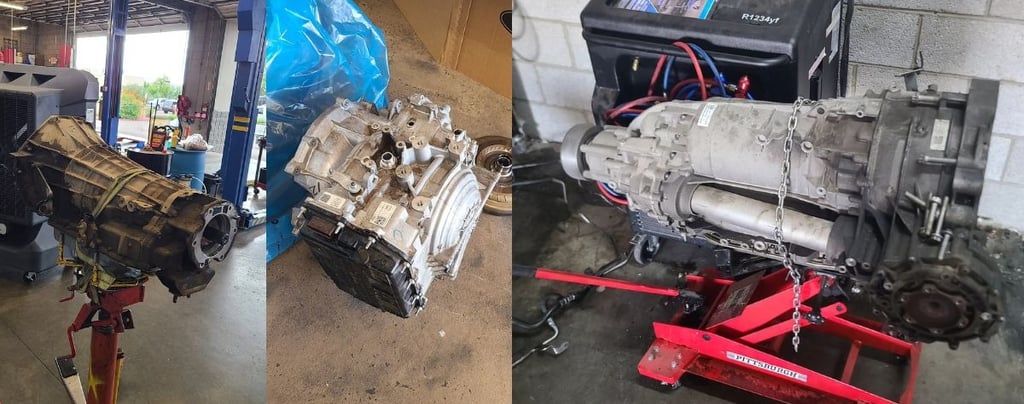
Dual-catch transmissions are generally understood as dual-clutch systems, and they feel very different from a traditional automatic. The design allows one gear to be prepared while another is still engaged, so shifts can happen with impressive speed.
That quick response is a big reason they are common in performance-focused vehicles, including many European models. At higher speeds, they feel sharp and efficient. In slower traffic, though, they can sometimes seem jerky or hesitant, which makes it important to distinguish normal behavior from signs of developing wear or control issues.
Continuously Variable Transmissions (CVT)
A CVT does not shift through gears in the same way most drivers expect, which is why it usually feels unfamiliar at first. Instead of moving from one fixed gear to the next, a CVT changes smoothly through a range of gear ratios, so acceleration feels more seamless.
Some drivers like how seamless it feels, especially during steady commuting. Others notice that it responds differently under heavier acceleration. Since CVTs depend heavily on precise operation, even small problems can affect performance. Unusual noises, slipping sensations, or delayed responses should be checked before the issue becomes more serious.
Automated Manual Transmissions (AMT)
An automated manual transmission sits in an interesting middle ground. Its foundation is similar to a manual gearbox, yet the clutch work and gear changes are handled by the vehicle through electronic and mechanical controls.
Because of that setup, the driving feel can seem unusual to someone expecting the smoothness of a conventional automatic. Shifts may feel more deliberate, and some pauses between gears are normal depending on the design. Once problems develop, those pauses can become more noticeable. Faults in actuators, sensors, or clutch operation change how the vehicle behaves in traffic.
Hybrid & Electric Vehicle Transmissions
Hybrid and electric vehicles change the transmission conversation because they do not always rely on the same kind of gear-changing system found in gas-powered cars. Hybrids use specialized setups that balance engine and electric motor power in a very controlled way.
Fully electric vehicles usually have a much simpler arrangement, since electric motors deliver power differently from combustion engines. Even with fewer traditional shifts, drivetrain components still matter. Drivers may notice warning lights or changes in response that indicate a need for inspection, especially as these systems become more advanced in newer models.