
Explained: The Components of Your Vehicle AC System
Get the components of your vehicle's AC system explained. Understand how each part works to keep your car cool and address issues before they escalate.
Jimi Everette
12/11/20254 min read
In the intense heat of a Phoenix summer, a functioning vehicle air conditioning system is a necessity. This system, which seems to work like magic with the simple press of a button, is actually a complex network of parts working in harmony to cool your cabin.
Understanding this process provides insight into how to keep it running efficiently, especially in high-performance European vehicles. Having the components of your vehicle's AC system explained can help you recognize potential issues before they lead to an uncomfortable and costly failure. This knowledge empowers you to maintain your car's comfort and integrity.
The Basics of How Vehicle AC Works
Your car’s air conditioning system operates on a principle similar to a refrigerator. It doesn't create cold air; rather, it removes heat and moisture from the air inside your vehicle. The system accomplishes this through a continuous cycle that involves a special chemical, a refrigerant.
The refrigerant changes between liquid and gaseous states, absorbing heat from the cabin and releasing it outside the vehicle. Several key mechanical parts drive this heat-exchange process, each playing a critical role in delivering the cool, refreshing air you rely on.
Key Components of a Vehicle AC System
While the process is complex, we can break it down by examining the primary components of the cooling cycle. Each component must function perfectly for the system to perform as intended.
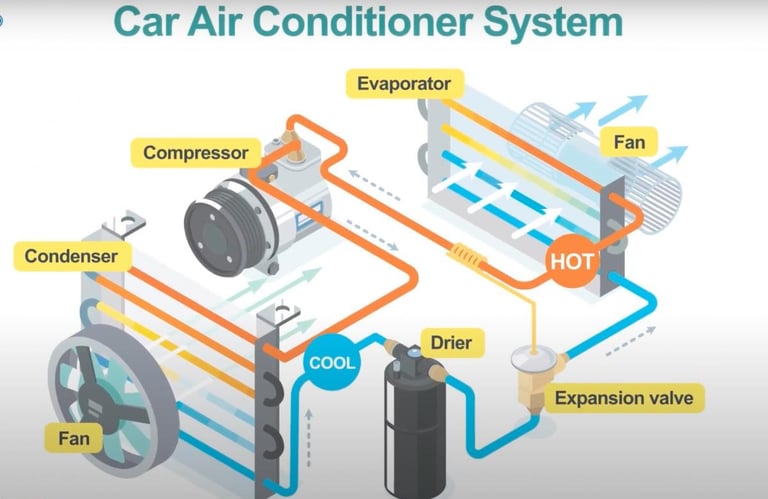
Compressor: The Heart of the System
The compressor is in the driver’s seat of your AC system. Driven by your car's engine via a serpentine belt, it pressurizes, or compresses, the refrigerant. When you turn on your AC, a clutch on the compressor engages, and the compressor begins to pump low-pressure gaseous refrigerant, increasing its pressure and temperature significantly. It then sends this hot, high-pressure gas to the next component in the line: the condenser.
Condenser: The Heat Releaser
Located at the front of the vehicle, usually ahead of the radiator, the condenser serves as a heat exchanger. As the hot, high-pressure refrigerant gas flows through its series of tubes, airflow from driving and a dedicated cooling fan dissipates the heat. This process cools the refrigerant enough to cause it to condense into a high-pressure liquid, effectively releasing the heat absorbed from your car's cabin into the outside air.
Receiver-Drier or Accumulator: The Moisture Filter
After leaving the condenser, the high-pressure liquid refrigerant passes through a filtering component. In expansion-valve systems, the receiver-drier handles the filtering role. In systems with an orifice tube, it’s an accumulator.
Each component plays a key role in filtering out moisture and impurities from the refrigerant. Moisture is the enemy of an AC system, as it can freeze and cause blockages or mix with refrigerant to form corrosive acids. This component acts as a vital safety net.
Expansion Valve or Orifice Tube: The Flow Regulator
This is where the high-pressure liquid refrigerant becomes a cold, low-pressure liquid. The expansion valve (or orifice tube in some systems) acts as a small nozzle that restricts the flow of refrigerant. As the refrigerant passes through this restriction, its pressure drops dramatically. This rapid expansion causes the refrigerant's temperature to plummet, preparing it to absorb heat inside the evaporator.
Evaporator: The Cooling Core
The evaporator is another heat exchanger, but it works the opposite way from the condenser. Located inside your vehicle’s passenger compartment behind the dashboard, it is where the cooling actually happens.
The cold, low-pressure liquid refrigerant flows through the evaporator's core. The blower motor pushes warm cabin air across the evaporator's fins. The refrigerant absorbs heat from the air, causing it to boil and return to a low-pressure gas. The air, now stripped of its heat, becomes cold and blows into your cabin.
Refrigerant: The Cooling Agent
Refrigerant is the specialized chemical that circulates through the system, absorbing and releasing heat. Modern vehicles use a refrigerant called R-134a or the more environmentally friendly R-1234yf. A precise amount of refrigerant, often called a "charge," is necessary for the system to work correctly. Too little or too much can reduce performance and damage components.
Supporting Components
Beyond the core six, several other components are essential to the AC system's operation. These components work together to ensure consistent, reliable cooling performance.
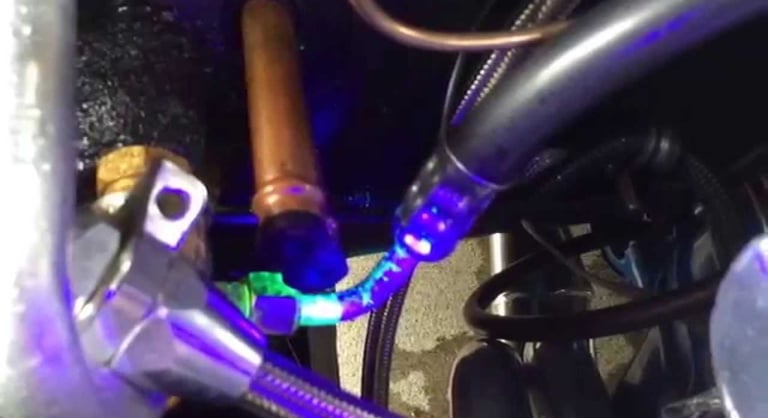
AC Hoses and Seals: These are responsible for carrying the refrigerant throughout the system, creating a closed loop between all major components. Over time, these parts can degrade and become a common source of refrigerant leaks.
AC Fans (Cooling Fans): Located near the condenser, these fans assist in dissipating the heat that the refrigerant has absorbed from the cabin, which is crucial for the cooling cycle to continue effectively.
Cabin Air Filter: This filter cleans the air blown into the cabin, trapping dust, pollen, and other debris. A clogged cabin air filter can restrict airflow and reduce cooling efficiency.
Sensors and Electronic Controls: Modern AC systems are equipped with various sensors and control modules that monitor pressure and temperature. These electronics regulate the system’s operation to ensure efficiency and protect components from damage.
Common Signs of AC Component Issues
When your AC starts to fail, it is almost always due to one of these components malfunctioning. Weak or warm airflow often indicates low refrigerant due to a leak, a failing compressor clutch, or a clogged orifice tube.
Strange noises, such as rattling or grinding when the AC is on, can indicate a failing compressor. A musty smell from the vents might suggest mold or mildew buildup on the evaporator core. Any of these signs warrants a professional car AC service to accurately diagnose the problem.
Maintenance Tips for Longevity
To keep your vehicle's AC system in peak condition, especially through grueling Arizona summers, proactive care is essential.
Even in cooler months, run your AC for about 10 minutes once a week. This circulates the refrigerant and lubricates the system's seals, preventing them from drying out and cracking.
If you notice a decline in cooling performance, the system may need a refrigerant recharge. This should be done by a professional who can also check for leaks.
A clogged cabin air filter restricts airflow to the evaporator, reducing cooling efficiency and straining the blower motor. Replace it according to your vehicle manufacturer’s recommendations.
Understanding the components of your vehicle's AC system helps demystify what happens when you press that "AC" button. It is a robust system, but it requires periodic attention to deliver the cool comfort you depend on.
For expert diagnosis and repair of your European vehicle’s air conditioning system, trust the specialists at Autobahn Imports. Our technicians have the advanced tools and specialized knowledge to service brands such as BMW, Mercedes-Benz, Audi, and more.